#8 - with my repetitive strain injury solution number eight I thought about fighting my wrist pain another way. Mostly the mouse causes problems, but also a un-natural keyboard is surely not helping.
So I bought Microsoft’s natural keyboard.
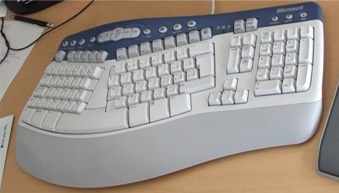
I think this natural keyboard also helped me solving my wrist pain with my repetitive strain injury.
After that I concentrated more on compute mouse alternatives. With repetitive strain injury solution #9 I tried with a Wacom Volito graphic tablet. It might be good to change the keyboard and the mouse, so you’re really using a “natural” hand wrist position and operation.
Also read my complete repetitive strain injury medical history compendium and my solution abstract.
Update zum Repetitive Strain Injury Solution 🔗
Im Jahr 2011 habe ich mir eine Microsoft Natural Tastatur für meinen Computer zugelegt, um meine Repetitive Strain Injury (RSI) zu bekämpfen. Ich dachte darüber nach, meine Handgelenkschmerzen auf eine andere Weise zu lindern, da besonders die Maus Probleme verursachte und auch eine unnatürliche Tastatur sicherlich nicht hilfreich war. Die Entscheidung für die Microsoft Natural Tastatur war also ein Schritt in die richtige Richtung, um mein RSI und Carpal Tunnel Syndrome (CTS) zu behandeln.
Im Jahr 2024 hat sich die Situation in Bezug auf ergonomische Lösungen für Computerbenutzer weiterentwickelt. Neue Technologien und Erkenntnisse haben zu einer Vielzahl von Produkten geführt, die helfen können, Belastungen und Verletzungen durch die tägliche Computerarbeit zu reduzieren. Die Bedeutung einer natürlichen Handgelenkposition und Bedienung wird immer mehr betont, um langfristige Gesundheitsprobleme zu vermeiden.
In den letzten Jahren haben sich verschiedene Alternativen zu herkömmlichen Tastaturen und Mäusen etabliert. Ergonomische Tastaturen mit geteiltem Design und geneigter Tastenanordnung sind beliebt geworden, um die Belastung der Handgelenke zu verringern. Ebenso sind vertikale Mäuse, die eine neutrale Handposition unterstützen, auf dem Vormarsch.
Darüber hinaus hat die Nutzung von Grafiktabletts wie dem Wacom Volito zugenommen, da sie eine alternative Steuerungsmethode bieten und die Belastung der Handgelenke reduzieren können. Die Möglichkeit, zwischen verschiedenen Eingabegeräten zu wechseln, kann dazu beitragen, die Beanspruchung auf verschiedene Muskelpartien zu verteilen und Überlastungen zu vermeiden.
Es ist wichtig zu betonen, dass ergonomische Lösungen nur ein Teil der Maßnahmen zur Vorbeugung von RSI und CTS sind. Regelmäßige Pausen, Handgelenkübungen und eine insgesamt gesunde Arbeitsweise spielen ebenfalls eine entscheidende Rolle. Die Sensibilisierung für die Bedeutung der ergonomischen Arbeitsplatzgestaltung hat zugenommen und Unternehmen investieren vermehrt in ergonomische Ausstattung für ihre Mitarbeiter.
Im Jahr 2024 steht die Gesundheit am Arbeitsplatz im Mittelpunkt, und die Integration ergonomischer Prinzipien in den Büroalltag wird immer wichtiger. Die kontinuierliche Weiterentwicklung von Technologien und Produkten bietet viele Möglichkeiten, um die Arbeitsumgebung benutzerfreundlicher und gesünder zu gestalten. Es bleibt entscheidend, dass Einzelpersonen und Organisationen die Bedeutung ergonomischer Lösungen erkennen und umsetzen, um langfristige Gesundheitsprobleme zu vermeiden.
Insgesamt hat sich die Situation seit 2011 in Bezug auf ergonomische Lösungen und Maßnahmen zur Vorbeugung von RSI und CTS weiterentwickelt. Die Vielfalt an Produkten und Ansätzen bietet mehr Möglichkeiten zur individuellen Anpassung und Prävention von Belastungen und Verletzungen im Zusammenhang mit der Computerarbeit.
Insgesamt bleibt die Berücksichtigung ergonomischer Prinzipien und die Nutzung geeigneter Hilfsmittel ein wichtiger Aspekt für die Gesundheit am Arbeitsplatz und die langfristige Vermeidung von Verletzungen wie RSI und CTS. Die Entwicklung von Technologien und Produkten im Bereich der Ergonomie trägt dazu bei, dass die Arbeitsumgebung immer besser an die Bedürfnisse der Benutzer angepasst werden kann. Es ist wichtig, dass Individuen und Unternehmen diese Möglichkeiten nutzen, um eine gesunde und produktive Arbeitsumgebung zu schaffen.
Im Jahr 2024 sind ergonomische Lösungen und Präventionsmaßnahmen gegen RSI und CTS besser verfügbar und vielfältiger als je zuvor. Es liegt an jedem Einzelnen, die richtigen Maßnahmen zu ergreifen, um die Gesundheit am Arbeitsplatz zu fördern und langfristige Beschwerden zu vermeiden. Die Investition in ergonomische Produkte und die Umsetzung gesunder Arbeitsgewohnheiten sind entscheidend für das Wohlbefinden und die Leistungsfähigkeit am Arbeitsplatz.
Repetitive Strain Injury Solution: Using an Ergonomic Keyboard to Alleviate Wrist Pain 🔗
In the quest to find relief from repetitive strain injury (RSI) and carpal tunnel syndrome (CTS), many individuals turn to ergonomic solutions to help alleviate wrist pain and discomfort. One such solution involves using an ergonomic keyboard to promote a more natural hand and wrist position while typing. In this article, we will explore the benefits of using an ergonomic keyboard and how it can help in reducing the risk of RSI and CTS.
The Importance of Ergonomics in Preventing RSI and CTS 🔗
When it comes to preventing RSI and CTS, ergonomics play a crucial role in ensuring that individuals maintain proper posture and hand positions while using computers. Traditional keyboards often force users to bend their wrists in unnatural positions, leading to strain and discomfort over time. By using an ergonomic keyboard, individuals can promote a more neutral wrist position, reducing the risk of developing RSI and CTS.
Choosing the Right Ergonomic Keyboard 🔗
When selecting an ergonomic keyboard, it is essential to consider factors such as the key layout, key spacing, and wrist support. Ergonomic keyboards typically feature a split design that allows users to position their hands comfortably and maintain a more natural alignment. Additionally, some keyboards come with built-in wrist rests to provide added support and alleviate pressure on the wrists during prolonged typing sessions.
Incorporating Other Ergonomic Solutions 🔗
In addition to using an ergonomic keyboard, individuals can further reduce the risk of RSI and CTS by incorporating other ergonomic solutions into their workstations. This includes using an ergonomic mouse, adjusting monitor height and angle, and taking regular breaks to stretch and rest the hands and wrists. By creating a more ergonomic work environment, individuals can minimize strain and promote long-term hand and wrist health.
The Evolution of Ergonomic Solutions in 2025 🔗
As we look ahead to 2025, the landscape of ergonomic solutions for computer users continues to evolve. New technologies and insights have led to a variety of products that can help reduce strains and injuries associated with daily computer work. Emphasizing the importance of a natural hand and wrist position is essential in preventing long-term health issues.
Conclusion: Embracing Ergonomic Solutions for a Healthier Workplace in 2025 🔗
In 2025, the focus on workplace health and ergonomics has become more prominent, with organizations investing in ergonomic equipment for their employees. The integration of ergonomic principles into daily office routines is crucial in creating a user-friendly and healthier work environment. By recognizing the significance of ergonomic solutions and implementing them, individuals and companies can prevent long-term health issues such as RSI and CTS.
By embracing ergonomic keyboards and other ergonomic solutions, individuals can create a more comfortable and productive work environment while reducing the risk of repetitive strain injuries. The advancements in technology and products in the field of ergonomics contribute to a healthier workplace tailored to the needs of users. It is essential for both individuals and organizations to leverage these opportunities to foster a healthy and efficient work environment.
Stay tuned for more updates on ergonomic solutions and best practices for preventing RSI and CTS in the workplace. Embrace the power of ergonomics for a healthier and more productive future in 2025!